403-266-2283
1918 Kensington Rd NW Unit #310, Calgary, AB T2N 3R5, Canada

Together, Small Steps Create Big Change
For the past 16 years, the Small Steps to Success campaign has provided the vital funding that powers NUCCA research. Each November, Vibe Health along with other NUCCA clinics across North America come together to ensuring NUCCA remains recognized as a precise, evidence-based approach to care.
The fundraising conducted through Small Steps is the lifeline for UCRF research (Upper Cervical Research Foundation). It allows us to publish peer-reviewed studies, mentor students, and validate the tools NUCCA doctors use every day in practice. Without these efforts, the science behind NUCCA would stall. With your help, it thrives. Through the month of November, we will be collecting your donations , via email, in person during an appointment or mail. Any amount you feel called to give, we graciously appreciate. With many supporters stepping up , even small donations (“small steps”) lead to large changes with the help of many working towards a common goal. Tax receipts are provided to any donation over $50. Small or large, you support is greatly appreciated!! Want to learn more of how NUCCA & the UCRF uses the funding? Read below…….
Research Focus Areas for 2025
This year, UCRF is advancing a comprehensive portfolio of projects that strengthen NUCCA care today and build credibility for the future.
1. Anatometer / GSA Validation Study
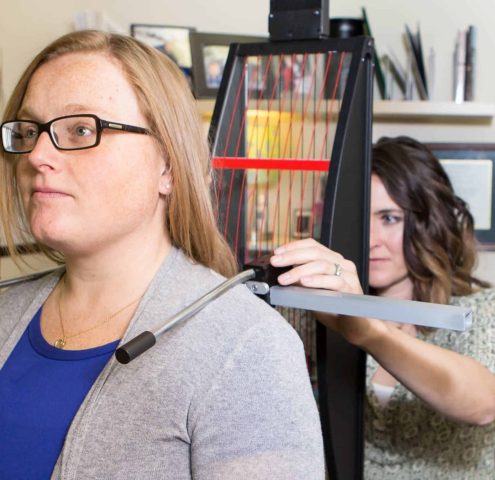
Accurate posture measurement is one of the most visible and essential outcomes of NUCCA care, serving as a strong indicator of overall health. To ensure confidence in these assessments, UCRF is validating two key tools:
This study is designed to confirm that these tools provide consistent, reproducible, and scientifically sound measurements. Reliable posture data not only strengthens clinical decisions in everyday practice but also ensures that NUCCA research meets the highest standards of evidence.
Your support enables the validation of these tools, providing NUCCA doctors with the precision they require and patients with the quality care they deserve.
2. Radiographic Positioning Agreement Study – R.A.S. System
Accurate x-ray positioning is crucial for every NUCCA correction. The Radiographic Alignment System (R.A.S.) study was created to assess the consistency and reliability of NUCCA pre- and post-x-ray positioning across clinics.
Our team has gathered extensive data to measure how doctors of varying training and experience approached NUCCA x-ray positioning. The results revealed that experience and training have a significant impact on accuracy—a finding that underscores the importance of both validated NUCCA protocols and ongoing professional education.
We are now finalizing a peer-reviewed paper to present these significant results. This publication, authored by Drs. Jaimie Johnson, PhD, Gordon Hasick, Craig Lapenski and David Vasquez will help establish clearer guidelines for NUCCA imaging and strengthen the credibility of radiographic procedures used in NUCCA clinical care worldwide.
Your support through the Small Steps campaign ensures that studies like this are published and shared, thereby providing NUCCA practitioners with essential standards and building trust among patients.
3. The Optimal Correction of the ASC, Stability, and Quality of Life Impact
At the core of NUCCA care is the Atlas Subluxation Complex (ASC). This study investigates how NUCCA adjustments, carried out with the highest precision and thoroughness, affect long-term spinal stability, neurological function, and overall quality of life.
Our goal is to define what “optimal correction” truly means in clinical practice:
By examining both structural and patient-centred outcomes, this project presents a series of papers that further strengthen the gold standard for NUCCA corrections.
Your support through the Small Steps campaign helps fund vital research, giving NUCCA doctors a clear care plan and patients confidence in evidence-based results.
4. Prevalence of the ASC Syndrome in the General Population
How prevalent is the Atlas Subluxation Complex (ASC) Syndrome? Until now, we haven’t had a clear answer—an issue that may have hindered wider recognition of NUCCA’s significance.
In response to recommendations from the National Institutes of Health (NIH), UCRF is launching a landmark study to determine the actual prevalence of ASC Syndrome in the general population. This is one of the most significant projects ever undertaken in NUCCA research, with the potential to:
This study could fundamentally alter the perception of NUCCA within healthcare by illustrating the potential impact on many lives through ASC Syndrome.
With your support through the Small Steps campaign, we can take this bold step forward—producing data that not only benefits patients but also elevates NUCCA on the global healthcare stage.
5. Developing a NUCCA Practice-Based Research Network (PBRN)
We are creating a Practice-Based Research Network (PBRN)—a collaborative community of NUCCA clinics working together across North America. This network will enable us to:
The NUCCA PBRN will serve as the backbone for future large-scale studies, enabling us to ask bigger questions, publish stronger evidence, and demonstrate NUCCA’s impact within chiropractic and beyond.
Your support through the Small Steps campaign helps turn this shared vision into reality—transforming everyday clinical practice into impactful research that shapes the future of NUCCA care.
6. Student Research Mentoring Scholarships
The UCRF Student Research Scholarship Program is shaping the future of NUCCA by investing in the next generation of researchers.
Each year, five outstanding chiropractic students are selected to partner with seasoned NUCCA doctors. Together, they design, conduct, and publish research that strengthens the scientific foundation of NUCCA care.
These scholarships are more than just financial aid—they provide an educational opportunity to ignite passion for research, foster collaboration, and prepare the future leaders who will advance NUCCA.
Your gift to the Small Steps campaign helps mentor the next generation, ensuring NUCCA research continues to thrive for decades to come.
7. Ongoing Blood and CSF Flow Migraine Study Data Review
The Blood and Cerebrospinal Fluid (CSF) Flow Study is among the most advanced projects ever undertaken in NUCCA research. This ongoing review aims to understand how NUCCA care might influence blood and CSF circulation in the brain and spinal cord, and what that means for patients living with migraines and related neurological conditions.
Our current work involves:
This study has the potential to link NUCCA care with measurable changes in brain physiology—a vital step toward greater scientific recognition and medical collaboration.
With your support through the Small Steps campaign, we can bring these findings to publication and share them with the world, giving patients and doctors stronger evidence of NUCCA’s profound impact.
Why This All Matters:
These research efforts extend beyond academia—they directly impact how doctors practice, how patients recover, and the perception of NUCCA within the broader healthcare community.
Our aim for 2025–26 is to raise $85,000 to support and publish these research projects. Every donation to the Small Steps campaign helps ensure that NUCCA research keeps progressing—one project, one student, and one publication at a time.
Please join us this November.
Read the 2025 UCRF Impact Report—because together, small steps truly create big change.
Call the clinic for more information and how to provide your gift this coming month!

Do you ever feel like a prisoner to your migraines? One minute you’re trying to tackle your to-do list or enjoy a moment with your kids, and the next, you’re sidelined—curled up in bed, blinds drawn, every sound and flicker of light stabbing through your skull. The hours stretch on, the pain unrelenting, and you’re left wondering: How long will this last? Maybe you’ve had to cancel plans, call in sick to work or miss out on moments that matter. The helplessness, the desperation for relief, can feel overwhelming.
If this sounds familiar, you’re not alone. Here in Calgary, countless people are waging the same battle, trying to break free from migraines that seem to control their lives. At Vibe Health & Spine, we understand that you’re not just looking for a temporary fix—you want your life back. And we’re here to help you find a way to achieve natural migraine relief in Calgary.
When you’re in the throes of a migraine, time feels distorted. Hours can drag on like days, and you might wonder if the pain will ever end. The truth is that migraines are complex and can vary significantly from person to person.
On average, a migraine attack can last anywhere from 4 to 72 hours, but understanding how long each phase of a migraine lasts can provide more clarity:
This early warning stage can begin hours or even days before the headache. Common symptoms include mood changes (like irritability or euphoria), neck stiffness, fatigue, and food cravings. This phase can last 1 to 2 days, giving you a heads-up before the real pain sets in.
Not everyone experiences this phase, but for those who do, it typically occurs shortly before the headache and can last from a few minutes to an hour. Aura symptoms often include visual disturbances, like flashing lights or blind spots, and sensory changes, such as tingling or numbness.
This is the most intense and recognizable part of a migraine. The pain—often throbbing or pulsing—can last anywhere from 4 to 72 hours. It’s frequently accompanied by nausea, vomiting, and heightened sensitivity to light, sound, and even smells. If the headache phase extends beyond 72 hours, it may escalate into status migrainosus, a severe and prolonged migraine that requires medical intervention.
Also known as the "migraine hangover," this phase occurs after the headache subsides and can linger for 1 to 2 days. During this time, you might feel fatigued, foggy, and sensitive to light and sound, as your body recovers from the migraine attack.
Beyond understanding the phases of a migraine, it’s also important to consider the type of migraine you experience. Different types come with varying durations and patterns, which can help explain why some migraines feel more relentless than others.
Episodic migraines occur fewer than 15 days per month. Each attack usually fits within the typical 4 to 72-hour window. These migraines may seem more manageable because of the time between episodes, but without proper care, they can still significantly disrupt your life.
If you experience migraines on 15 or more days per month, you may fall into the chronic category. Chronic migraines can feel never-ending, with one attack often blurring into the next. While each individual headache still typically lasts between 4 and 72 hours, the frequency makes it feel as if there’s little time to recover.
This severe type of migraine lasts longer than 72 hours and is often resistant to standard treatments. The prolonged nature of status migrainosus can be debilitating, leading to increased risk of dehydration, fatigue, and even hospital visits to manage symptoms.
Not all migraines come with the classic headache pain. Silent migraines involve many of the other symptoms—like aura, nausea, and sensitivity to light—without the headache itself. While the headache phase is absent, the other phases, such as aura and postdrome, can still last for hours or even days, making these migraines disruptive in their own way.
Understanding the type of migraine you experience can help your healthcare provider tailor your care plan. Additionally, the more insights you have on your condition, the better you can manage or avoid triggers.
Understanding the phases and types of migraines provides valuable insight into their complexity, but sometimes the root cause of these debilitating episodes can be traced to an often-overlooked factor: the alignment of your atlas (C1) vertebra. In many cases, migraines are triggered or worsened by a misalignment, or subluxation, of the atlas.
This small but crucial vertebra sits at the top of your spine and plays a vital role in supporting your head and protecting the brainstem. When the atlas shifts out of alignment, it can disrupt normal nervous system function, increase nerve sensitivity, and impair blood flow to the brain—all of which can contribute to migraine attacks.
At Vibe Health & Spine, you can work with a migraine chiropractor in Calgary who focuses on identifying and correcting atlas subluxations. By addressing this underlying issue, you can potentially experience lasting relief and help reduce the severity and frequency of migraines.
Our Calgary Alberta Chiropractic doctors use advanced diagnostic tools to identify even the smallest misalignments and their impact on your nervous system. As a result, they can provide gentle adjustments that are tailored specifically to your unique anatomy.
When the atlas is properly aligned, the nervous system can function as intended. Blood flow improves, nerve irritation decreases, and the pressure on various parts of the body is relieved. Over time, this can lead to a significant reduction in:
Imagine waking up each morning free from the constant worry of when your next migraine will strike. Life without debilitating headaches means more time to enjoy Calgary’s vibrant community, focus on your goals, and spend meaningful moments with loved ones. It’s a future where your health and vitality take center stage.
At Vibe Health & Spine, we’ve seen the transformative power of upper cervical care. Many of our patients have moved from enduring relentless migraines to experiencing fewer, less intense episodes. They’ve regained energy, clarity, and control over their lives.
You can too! Don’t let migraines hold you back any longer. Take the first step toward lasting relief and a brighter future by scheduling a consultation today. Your path to wellness starts with us.

It’s a common concern. Some migraines naturally last longer, especially if they’re chronic or severe, like status migrainosus, which can stretch beyond 72 hours. However, certain factors can prolong your migraines, including misalignment in the upper cervical spine. At Vibe Health & Spine in Calgary, we often find that correcting atlas misalignment helps reduce the severity and duration of migraine attacks.
Yes, and it could be a sign of a deeper issue. Many migraine sufferers experience neck stiffness or pain, which often points to an underlying problem in the upper cervical spine. Misalignment of the atlas (C1) vertebra can irritate nerves and restrict blood flow, contributing to migraines. Our specialized care at Vibe Health & Spine addresses this connection to provide relief.
We hear this a lot! While many people associate chiropractors with back pain relief, Upper Cervical Chiropractors focus on the neck, particularly the atlas. This small vertebra plays a crucial role in nervous system health. By gently aligning the atlas, we help reduce migraine triggers and improve your body’s ability to heal. Patients in Calgary often see a noticeable difference in their migraines after starting care.
If you’ve felt stuck trying medications, lifestyle changes, and other treatments, Upper Cervical Care offers a fresh and whole-body approach to healing and revitalizing the body. Instead of just managing symptoms, we focus on correcting atlas misalignment, which could be the root cause of your pain. This targeted care helps many of our patients in Calgary experience fewer, shorter, and less intense migraine episodes.
To schedule a consultation with Vibe Health and Spine, call our Calgary office at 587-803-3354. You can also click the button below.

If you are outside of the local area you can find an Upper Cervical Doctor near you at www.uppercervicalawareness.com.