403-266-2283
1918 Kensington Rd NW Unit #310, Calgary, AB T2N 3R5, Canada

Who This Blog Is For: Anyone in Calgary — from the downtown core to Beltline, Bridgeland, and the growing communities out in Mahogany and Sage Hill — who has been chasing TMJ pain relief for months or years and still wakes up with a tight jaw, a dull ache behind the ear, or a click that never quite went away. This is for the person who has already done the responsible thing — seen the right providers, tried the recommended approaches — and is still wondering why the pattern keeps returning.
Does your jaw feel locked up before you've even had your first coffee? Do you find yourself clenching through back-to-back meetings, only to pay for it by evening with a headache that wraps from your jaw up into your temple? Have you wondered, quietly, whether something more fundamental is being missed?
These are the questions we hear most often from Calgary patients who arrive at Vibe Health after a long road of partial answers. TMJ pain has a way of being present enough to affect your daily life — your sleep, your focus, your ability to eat comfortably — but elusive enough that it rarely gets fully resolved. If that sounds familiar, what follows may offer a perspective you haven't encountered yet.
TMJ pain relief refers to a lasting reduction in jaw pain, tension, clicking, and the associated symptoms — headaches, ear fullness, facial aching — that make this condition so disruptive. For many people, genuine relief remains frustratingly out of reach because the approaches they've tried address the jaw itself without examining what may be driving the jaw into that dysfunctional pattern in the first place.
That missing piece, for a significant number of patients, lives at the very top of the spine.
The temporomandibular joint sits in close structural relationship with the upper cervical spine. When the atlas — the first cervical vertebra — shifts out of its optimal position, the body compensates throughout the entire postural chain to keep the head level. That compensation creates uneven muscular tension, altered nerve signaling, and asymmetrical loading across the jaw joint. The jaw doesn't malfunction in isolation. It responds to what the rest of the structure is doing — and if the foundation is off, the jaw often bears the consequences.
We want to be honest about something that doesn't always come up in a standard TMJ conversation: the jaw joint and the upper cervical spine share both anatomical proximity and neurological territory. When the atlas shifts — even subtly — the compensation pattern that follows can alter the muscular balance on one side of the face and jaw, change the tension through the muscles that control mouth opening and closing, and create a cascade of pressure that the TMJ absorbs chronically.
This is not a fringe idea. It's a structural reality that upper cervical practitioners assess routinely. Calgary patients who come in describing years of jaw clicking, morning tightness, or one-sided facial aching frequently present with measurable atlas misalignment that has never been part of their TMJ conversation — not because their previous providers missed something important, but because the upper cervical spine simply isn't part of a standard dental or physiotherapy assessment.
The compensation pattern — not the joint itself — is often where the answer lives.
Night guards, occlusal splints, and jaw physiotherapy are legitimate, well-intentioned approaches — and for many people they provide meaningful symptom management. We have enormous respect for the providers who offer them. The limitation isn't the quality of the care. It's the scope.
When jaw-focused care addresses the joint without examining the structural environment the joint is operating in, it's working on the effect rather than the contributing pattern. The jaw gets some relief. The underlying compensation continues. Symptoms return — sometimes gradually, sometimes quickly — and the cycle begins again.
This is the pattern that brings many Calgary patients to upper cervical care after years of managing but never fully resolving. They haven't failed their previous care. Their previous care simply didn't have the full picture.
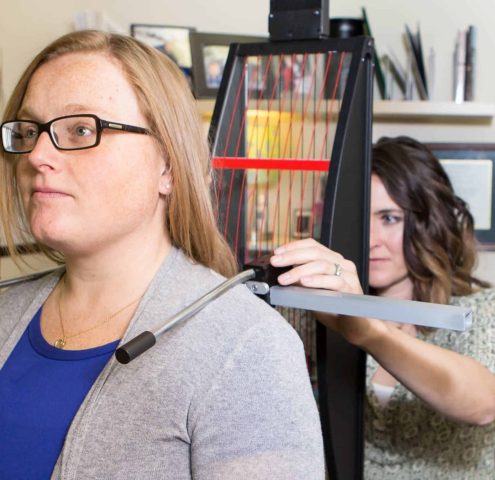
NUCCA is a precise, measurement-guided approach within upper cervical care that uses detailed imaging to assess the position of the atlas before any correction is made. There are no forceful adjustments. The correction itself is gentle — applied by hand to the atlas with a specificity that requires advanced training and careful analysis.
For TMJ patients, the goal is not to adjust the jaw. It's to restore the structural foundation that the jaw depends on. When the atlas returns to a more optimal position, the compensation pattern throughout the spine and musculature begins to shift. Muscle tension that has been chronically asymmetrical starts to normalize. The load on the jaw joint changes.
Several imaging assessments are involved in the process at Vibe Health — the team works from measurements, not guesswork, and every correction is informed by what the imaging shows. Patients new to this approach often remark that it's unlike anything they've experienced — quieter, more methodical, and more focused on precision than force.
We find this part meaningful to share, because it often surprises people. TMJ pain relief through upper cervical care rarely happens all at once — and that's actually a sign the process is working as it should. The jaw has been operating in a compensated pattern, in many cases, for years. As the atlas stabilizes and the postural chain begins to reorganize, patients frequently notice changes in layers.
Morning jaw tightness often eases before the clicking does. Sleep quality frequently improves earlier than expected — likely because the muscular tension driving nighttime clenching begins to reduce. Headaches that were assumed to be tension-related often become less frequent as the upper cervical region stabilizes.
Calgary's long winters and high-pressure work culture create conditions where clenching and jaw tension run chronically high. When the structural foundation shifts, many patients find that the daily load their jaw has been carrying quietly starts to feel lighter — and that the good days begin to outnumber the difficult ones.
There's a particular kind of exhaustion that comes with a problem you've addressed responsibly and still can't fully resolve. You've shown up. You've done the work. You've tried what made sense. And on the mornings when your jaw is already aching before the day has started, it's reasonable to wonder whether something in the picture has simply been missed.
At Vibe Health in Calgary, we work with patients who are exactly at that point — not as a last resort, but as a next step that brings a different lens to a problem they've been carrying for too long. If the structural foundation of your upper cervical spine has never been assessed in the context of your TMJ symptoms, that assessment is where we start.
Calgary winters are hard enough without waking up in jaw pain. The cycle you've been managing doesn't have to be permanent.
Schedule your consultation at Vibe Health and Spine today.
The first step is a conversation — and it costs you nothing to find out whether this is the piece that's been missing.

1. Can jaw pain really be connected to the top of my spine?
More often than most people realize. The atlas — the first bone in your cervical spine — sits in close structural proximity to the jaw joint and shares neurological territory with the muscles that control jaw movement. When the atlas shifts out of alignment, the compensation pattern that follows can create chronic asymmetrical tension across the jaw. It's a connection that doesn't show up in a standard dental X-ray, which is why it often goes unexamined for years.
2. My TMJ symptoms are mostly clicking and occasional aching — is that enough to warrant an upper cervical assessment?
Yes, and in many cases those are exactly the early signals worth paying attention to. Clicking often reflects asymmetrical loading on the jaw joint — one side working harder than the other over time. An upper cervical assessment looks at whether a structural compensation pattern may be contributing to that imbalance, before it progresses into more significant dysfunction.
3. How is the NUCCA correction different from a standard chiropractic adjustment?
NUCCA is a highly specific, measurement-guided approach focused exclusively on the atlas. Corrections are gentle — there is no cracking, twisting, or forceful manipulation involved. Everything is guided by detailed imaging taken before any correction is made. Patients frequently describe the experience as surprisingly subtle, especially compared to what they expected.
4. I've had TMJ symptoms for several years. Is upper cervical care still worth exploring?
Duration alone doesn't determine whether upper cervical care is appropriate — the presence of an atlas misalignment does. Patients with long-standing TMJ symptoms who have never had their upper cervical spine assessed often find that the structural picture tells a story their previous care didn't have access to. The assessment at Vibe Health is where that conversation begins.
5. Will my jaw be adjusted directly during NUCCA care?
No. NUCCA care focuses on the atlas — the structural foundation — not the jaw joint itself. The premise is that when the foundation is restored to a more optimal position, the compensation patterns driving jaw dysfunction have the opportunity to shift. The jaw is not manipulated directly at any point in this process.
6. What should I expect at my first visit to Vibe Health for TMJ concerns?
Your first visit begins with a thorough consultation — the team wants to understand your full symptom history, what you've already tried, and what your experience of this condition has actually been like day to day. From there, specific imaging is taken to assess the position of the atlas. Nothing is adjusted on the first visit until the measurements have been reviewed and a clear picture of your structural situation is established.
To schedule a consultation with Vibe Health and Spine, call our Calgary office at 587-803-3354. You can also click the button below.

If you are outside of the local area you can find an Upper Cervical Doctor near you at www.uppercervicalawareness.com.

Read Time: 4 minutes | Who This Blog Is For: Residents from Calgary and nearby cities and towns struggling with jaw tightness, clenching, or TMJ pain that gets worse during stressful weeks and want to understand what’s really going on beneath the surface.
Life in Calgary moves fast. Between long commutes on Deerfoot Trail, unpredictable weather, and work that rarely lets up, stress can start to show up in unexpected ways — especially in your jaw. You might notice your teeth pressing together during a tense meeting, or realize your jaw aches after navigating rush-hour traffic. What feels like “just stress” can actually be a sign of something deeper happening in your neck and spine.
At Vibe Health & Spine, we often hear from patients who describe this exact experience. Their TMJ pain flares up when life feels out of balance — but they’re surprised to learn how much their upper neck alignment contributes to it. Let’s explore how stress and atlas misalignment are connected, and what you can do to finally find relief.
Your jaw doesn’t clench for no reason — it’s your body’s way of coping with stress. When you’re under pressure, your nervous system triggers a fight-or-flight response that tightens muscles in the jaw, shoulders, and neck. Over time, that tightness becomes your new “normal.” You grind your teeth at night, wake up sore, and start to notice headaches or stiffness that won’t quite go away.
But here’s where things get more complicated: the muscles that control your jaw connect directly to your neck. So, when stress causes you to tense up, it’s not just your jaw that suffers — your whole upper spine begins to feel the strain.
The atlas, the top bone in your spine, plays a key role in how your head, jaw, and neck move. When it’s even slightly misaligned, it can throw off the balance of the surrounding muscles and joints — including the TMJ. That misalignment can also create uneven tension, making clenching or grinding worse over time.
When the atlas is off-center:
Many people in Calgary never realize their jaw pain could be connected to something higher up in the neck — but once that alignment is restored, the difference can be remarkable.
Certain parts of daily life here make TMJ pain harder to shake. You might recognize a few of these:
Individually, these might seem small — but together, they create a cycle of stress and strain that your body keeps replaying.
You don’t have to live with constant tightness or soreness. A few small adjustments can help reset your body’s natural rhythm and calm the muscles that surround your jaw and neck:
If your TMJ pain keeps returning, upper cervical care in Calgary can help address the structural imbalances that make that cycle so hard to break.
At Vibe Health & Spine, our team of Calgary chiropractors — including Dr. Blair Schmaus, Dr. Aurora Ongaro, and Dr. Jason Chesney — understands how life here affects your health. Between cold winters, long hours, and daily stress, your body often ends up holding more tension than it should.
Our approach to care focuses on precision and balance. By addressing the alignment of the atlas, we aim to restore calm to both the body and nervous system — helping patients experience less jaw tightness, fewer headaches, and better overall ease.
You don’t have to keep managing pain that keeps coming back. The first step toward lasting TMJ relief in Calgary is understanding how your stress, posture, and alignment work together — and finding care that supports all three.
Whether you’ve been clenching through the workday or waking up with jaw stiffness, the team at Vibe Health & Spine is here to help you find natural, gentle ways to relieve the tension and restore balance.

Why does stress make my jaw pain worse?
When you’re stressed, your body automatically tenses the muscles around your jaw and neck. This tension keeps the jaw in a semi-clenched state, and over time, that strain can cause inflammation or stiffness in the TMJ.
Can posture really affect jaw tightness?
Yes. Poor posture—especially slouching at a desk or looking down at a phone—pulls the head forward and tightens the muscles that connect the neck to the jaw. Correcting posture can ease both neck and jaw pressure.
What’s the link between the atlas and TMJ pain?
The atlas, the top bone of your spine, supports your head and influences how your jaw moves. When it’s misaligned, surrounding muscles compensate unevenly, often increasing jaw tension and discomfort.
Are there warning signs my jaw tension is becoming chronic?
Frequent headaches, clicking or popping when you chew, or morning soreness from clenching are early indicators. If these symptoms persist, it’s worth consulting a chiropractor for TMJ in Calgary.
How can I relax my jaw during stressful days?
Try gentle jaw relaxation techniques such as resting your tongue on the roof of your mouth, keeping your lips closed but teeth apart, or using deep breathing to calm muscle activity.
Do Calgary’s cold winters really make TMJ pain worse?
They can. Cold temperatures often lead to tighter muscles as your body braces against the chill. Warm scarves, hydration, and mindful relaxation can help minimize that effect.
Can upper cervical care in Calgary help reduce TMJ tension?
Gentle adjustments that restore proper alignment to the neck can help balance the muscles around the jaw, reducing tightness and improving overall comfort.
What’s the difference between short-term relief and long-term improvement?
Short-term fixes—like heat packs or massage—relax muscles temporarily. Long-term improvement usually requires addressing posture, stress patterns, and neck alignment so the tension doesn’t keep returning.
When should I see a professional for TMJ pain?
If you notice recurring tightness, limited movement, or pain affecting your daily life, that’s your cue to seek help from Calgary chiropractors experienced in TMJ and stress-related alignment issues.
What can I expect after seeking TMJ relief in Calgary?
Most people describe feeling lighter, more balanced, and less reactive to stress once the tension eases. With consistent self-care and guidance, relief can last well beyond the coldest Calgary season.
To schedule a consultation with Vibe Health and Spine, call our Calgary office at 587-803-3354. You can also click the button below.
If you are outside of the local area you can find an Upper Cervical Doctor near you at www.uppercervicalawareness.com.

That moment when your alarm goes off and you realize your jaw is already clenched tight from a night of grinding your teeth. Or when you try to yawn and feel that sharp pain shoot through your jaw joint. If this sounds like your typical morning routine here in Calgary, you're part of a community that understands how TMJ dysfunction can steal the joy from the start of each day.
Living with morning jaw pain doesn't have to be your normal. The team at Vibe Health & Spine has been working with Calgary residents to help them understand what might be contributing to their TMJ symptoms and explore gentle approaches that support the body's natural function.
We know how frustrating it can be when something as simple as having your morning coffee becomes uncomfortable because of jaw stiffness and pain.
TMJ (temporomandibular joint) dysfunction affects the joints that connect your jaw to your skull. For many Calgarians, symptoms are often worst first thing in the morning, and there are several reasons why this happens.
Here's something that might surprise you: the alignment of your upper neck can significantly influence how your jaw functions. The muscles that control jaw movement are closely connected to muscles in your neck and head. When the upper cervical spine isn't aligned properly, it can create a chain reaction that affects jaw function.
The upper cervical chiropractors at Vibe Health & Spine focus on this often-overlooked connection between spinal alignment and jaw function.
While addressing underlying alignment issues is important for long-term improvement, there are also practical steps you can take each morning to help ease TMJ discomfort:
Drink a glass of water first thing in the morning to help rehydrate your body and support optimal muscle function.
Living in Calgary means dealing with significant temperature variations and dry air, especially during our long winters. These environmental factors can influence TMJ symptoms in several ways:
How you sleep can significantly impact how your jaw feels in the morning. Here are some considerations for Calgary residents dealing with morning TMJ pain:
Calgary's fast-paced lifestyle can contribute to stress levels that affect TMJ symptoms. Many people don't realize how much stress affects their jaw muscles, particularly during sleep.
You might want to explore professional care options for TMJ relief in Calgary if you experience:
The team at Vibe Health & Spine can help assess whether upper cervical alignment issues might be contributing to your morning TMJ symptoms.
Upper cervical care focuses on supporting your body's natural ability to function optimally. When your upper cervical spine is properly aligned, it may help:
The goal isn't to force changes, but to remove interference that may be preventing your body from functioning as well as it could.
While immediate relief strategies are helpful, addressing underlying factors that contribute to morning TMJ pain can lead to more lasting improvements. This might include:
We understand how much morning jaw pain can affect your entire day. When you start each morning with discomfort, it can impact your mood, your energy levels, and your ability to enjoy the things you love about living in Calgary.
Our goal is to help you explore options that support your body's natural function so you can wake up feeling more comfortable and ready to take on the day. Whether you want to enjoy your morning coffee without jaw pain, have conversations without discomfort, or simply start each day feeling more at ease, there are approaches available that may help.
If you're tired of starting each day with jaw pain, if you're curious about how spinal alignment might be affecting your TMJ symptoms, or if you want to explore gentle approaches to supporting your jaw health, the team at Vibe Health & Spine is here to help.
We can't predict specific outcomes, as everyone's situation is unique. However, many Calgary residents have found that addressing spinal alignment helps support their overall comfort and quality of life.
Remember, you don't have to accept morning jaw pain as just part of your routine. There are gentle, natural approaches available that focus on supporting your body's ability to function optimally, and we're here to help you explore those options. Get in touch with our team today to learn more about our unique and gentle approach to healing and restoring the body.

Why is my TMJ pain always worst in the morning?
Morning TMJ pain is often most severe because of nighttime jaw clenching or teeth grinding, which strains the jaw muscles and joints for hours while you sleep. Additionally, sleep positioning, dehydration, and Calgary's cold morning temperatures can contribute to increased muscle tension and stiffness when you wake up.
How does upper cervical alignment affect my jaw function?
The muscles controlling your jaw are closely connected to neck muscles, and the nerves affecting jaw function travel through areas that can be influenced by upper cervical alignment. When your upper neck isn't aligned properly, it can create tension patterns and affect head positioning, which may impact how your jaw functions and feels, especially in the morning.
Can Calgary's dry climate really affect my TMJ symptoms?
Yes, Calgary's dry air, particularly during winter months, can affect the tissues around your jaw joints and contribute to overall muscle tension. The cold temperatures can also cause muscles to tense up throughout your head and neck region. Using a humidifier and keeping your jaw area warm may help reduce these environmental effects.
What can I do immediately when I wake up with jaw pain?
Start with gentle jaw stretches by slowly opening and closing your mouth, apply warm therapy with a damp cloth for 10-15 minutes, do gentle neck stretches and shoulder rolls, drink water to rehydrate, and take a few deep breaths before rushing into your day. These simple steps can help ease morning muscle tension.
How do I know if my sleep position is affecting my TMJ?
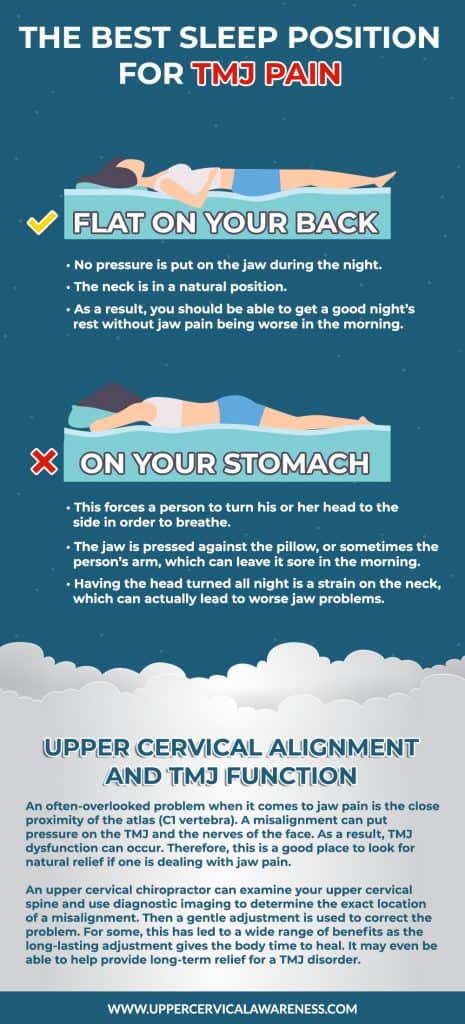
If you consistently wake up with jaw pain on one side, sleep on your stomach with your head turned, or use pillows that don't properly support your neck, your sleep position may be contributing to TMJ symptoms. Sleeping on your back with proper pillow support typically provides the most neutral positioning for your jaw and neck.
How long might it take to notice changes in my morning TMJ symptoms?
Everyone responds differently to care, and we can't predict specific timelines. Some residents notice improvements in their morning comfort relatively quickly, while others see gradual changes over time. Factors like how long you've had symptoms, your overall health, and how well your body responds to care all influence this process.
Can stress really cause morning jaw pain even while I'm sleeping?
Absolutely. Stress often causes unconscious jaw clenching that can continue during sleep through teeth grinding or jaw tension. Calgary's fast-paced lifestyle and work pressures can contribute to this stress response. The morning transition from sleep to waking can also trigger stress hormones that increase muscle tension in the jaw and neck area.
To schedule a consultation with Vibe Health and Spine, call our Calgary office at 587-803-3354. You can also click the button below.
If you are outside of the local area you can find an Upper Cervical Doctor near you at www.uppercervicalawareness.com.
TMJ disorders are a common occurrence with estimates stating that about 10 million in the US are dealing with pain and range of motion issues in the jaw. However, there are definitely ways to counteract the pain and still enjoy everything from eating to sleeping. Here are a few tips for dealing with TMJ problems naturally, including the best sleep position. We also included a quick discussion on Calgary Chiropractic and how it helps relieve TMJ pain.
Never miss your appointment with an Upper Cervical Doctor! Call 587-803-3354 or fill out our website form to schedule your visit to our practice.
If you deal with chronic pain in the temporomandibular joint, you’re likely looking for an effective way to manage your pain. Getting relief can allow you to go back to enjoying everyday things like speaking, eating, and sleeping. These simple acts can be too difficult when you have a TMJ disorder. But you may wonder:
We will answer these questions for you in our article.
A TMJ disorder can cause numerous symptoms besides just pain in the jaw. Here are some of the more common signs of a TMJ disorder:
It is important to note, however, that some of these underlying causes can have a similar genesis. For example, bruxism can be due to stress. A misaligned jaw or arthritis can be due to trauma. Ultimately many TMJ problems go back to the same underlying issue: misalignment of the C1 (atlas) vertebra.
This is because the atlas is directly between the ears and the TMJ. When a misalignment occurs, the surrounding soft tissue shifts to compensate. This keeps the head balanced. However, it can affect the ears, the jaw, and the facial nerve, among other things. It can also affect blood flow to the head and brainstem function. This can lead to all of the symptoms of TMJ problems.
Obviously, this underlying problem needs correction to obtain long-term relief. However, before we discuss how a TMJ chiropractor in Calgary can help, we will take a few moments to give you some TMJ pain management tips you can implement at home.
There are some ways to provide yourself some self-care at home to reduce the pain associated with TMJ dysfunction.
Ice is the best way to counteract inflammation, so this is particularly important if there is visible swelling. But even a little inflammation can cause pain, so it makes sense to use ice. Never put the ice or ice pack in direct contact with the skin, and be sure to use ice for no more than 20 minutes at a time. Don’t use heat on your jaw because it will have the opposite effect on inflammation.
Rest it from singing or yelling and try to avoid yawning. You can also eat softer foods for a few days. Try scrambled eggs or yogurt for breakfast. Enjoy some soup. Cook fruits and veggies rather than eating them raw. Try to avoid tough meats. Definitely, don’t chew gum.
Besides stretching, you can also massage the TMJ. The joint is about an inch in from your ear lobe. Massage in a circular motion going to the corners of your mouth and back to the TMJ.
If you work at a desk, make sure all of your monitors are at eye level so that you don’t end up adopting a forward head position. Limit mobile use to set times of the day, and hold your phone or tablet up, so you are not craning your neck so far. Pay special attention to your posture while driving. If you have to drive a long distance, stop at a rest area every couple of hours even if you don’t need the bathroom. It’s important to get out and walk.
This can help you to avoid one of the primary triggers of TMJ pain, neck pain, and headaches.
Self-care is good, but it won’t take care of the underlying cause of the pain. For that, you will want to see an upper cervical chiropractor. There is a specific form of chiropractic that focuses on the top two bones in the neck—upper cervical chiropractic. It uses diagnostic imaging to measure misalignments down to fractions of a millimeter because such a small subluxation can make a big difference in this part of the body.
Adjustments are extremely gentle and precise. This gives the surrounding soft tissue the time it needs to heal. As a result, jaw and ear position and function can return to normal. You may rapidly notice an end to pain, headaches, vertigo, and other symptoms. Since the adjustments are long-lasting, you will only need occasional maintenance after the soft tissue has stabilized. That makes upper cervical chiropractic a cost-effective solution as well.So, if you have been struggling with chronic jaw pain, it is time to visit a TMJ chiropractor in Calgary. An initial consultation may be your first step to finally becoming pain-free. Call Vibe Health & Spine at 587-803-3354 or fill out our form to set an appointment with one of our doctors.
To schedule a consultation with Vibe Health and Spine, call our Calgary office at 587-803-3354. You can also click the button below.
If you are outside of the local area you can find an Upper Cervical Doctor near you at www.uppercervicalawareness.com.